Fire Pump Maintenance and Testing Commissioning
The No-Nonsense, No-Panic Guide to Fire Pump Maintenance and Testing Commissioning. Let’s be honest: for most people, a Fire Pump is about as exciting as watching paint dry. It sits there in its room, all quiet and mysterious, hoping it never has to do its job. But here’s the kicker – on the worst day of your life, when there’s actual fire and real panic, that hunk of metal becomes the most important piece of equipment in the entire building.
That’s why Fire Pump Maintenance and Testing Commissioning isn’t just a boring chore; it’s like giving your building a superhero its annual physical. You want to be darn sure it can leap into action when called. Think of this essay as your friendly, slightly humorous guide to keeping that unsung hero in tip-top shape, brought to you by the folks who live and breathe this stuff. Consider this your one-stop shop for understanding the what, why, and how. Remember, for expert hands, you can always call the pros at Pump Services.
Why Bother? The “Better Safe Than Sorry” Speech
You wouldn’t drive a car for years without ever checking the oil, right? (If you would, please don’t tell me. I might be in traffic behind you. The same logic, but with higher stakes, applies to your fire pump. This piece of equipment is under unique pressure—literally and figuratively. It sits in standby mode 99.99% of the time. The one time you need it, it must work perfectly. A failure isn’t just an inconvenience; it’s a catastrophe waiting to happen.
Regular Fire Pump maintenance is the magical ritual that prevents this catastrophe. It’s the process of checking, cleaning, testing, and tweaking to ensure everything is operational. Fire Pump Testing Commissioning, on the other hand, is the grand finale—the official, documented proof that your pump will perform exactly as the design engineers dreamed it would. Skipping these is like buying a lottery ticket for a disaster. The goal is simple: transform that cold, silent pump in the corner from a “maybe-it-will-work” machine into a “we-can-bet-our-lives-on-it” system. This foundational work is the core of all reliable Fire Pump services.
Getting to Know Your Fire Pump: It’s Not Just a Big Motor
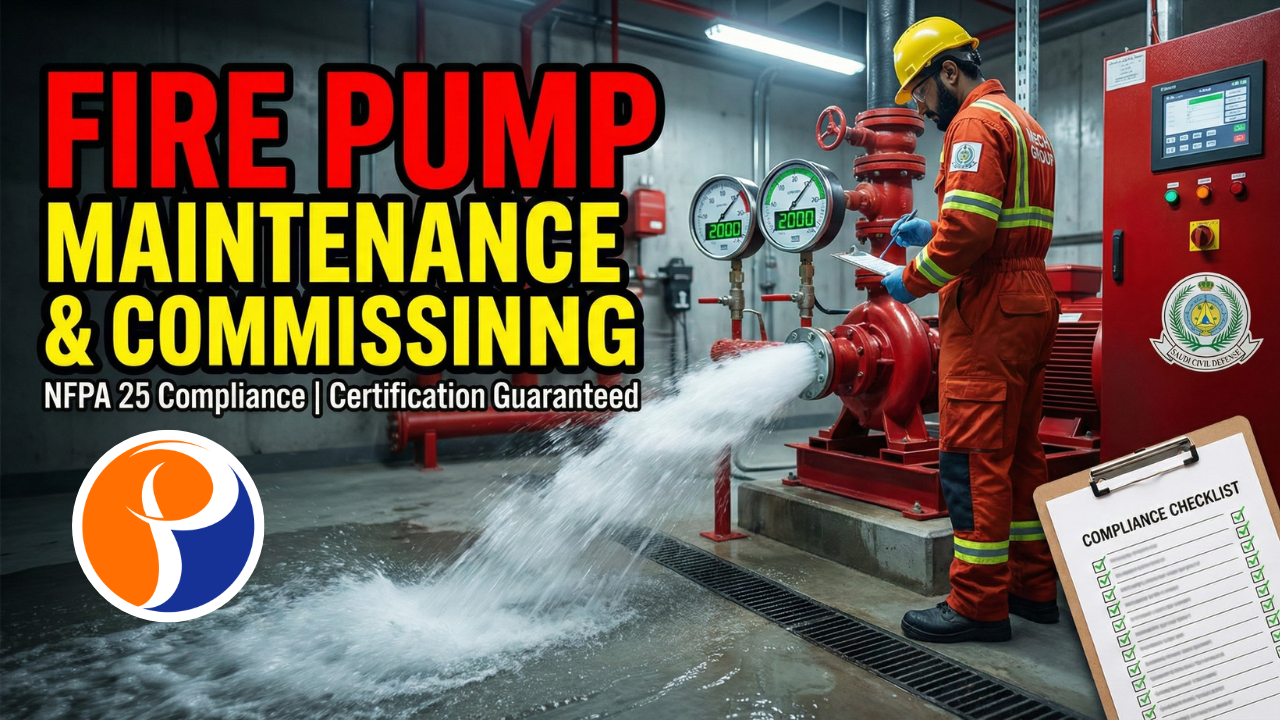
Before we start poking at it, let’s understand what we’re dealing with. A fire pump isn’t a simple garden hose attachment. It’s a complex system typically composed of a pump (the heart), a driver (usually an electric motor or diesel engine, the muscles), a controller (the brain), and a network of pipes and valves (the arteries). Each part has a specific role, and each part can throw a tantrum if ignored.
Think of the controller as the anxious overseer. It’s constantly monitoring water pressure. If a fire sprinkler head opens and pressure drops, the controller’s job is to scream, “WAKE UP!” to the driver, which then gets the pump spinning to shove vast amounts of water into the system. If any link in this chain is broken, the whole system fails. Fire Pump repair services often start here, diagnosing whether the issue is in the brain, the muscles, or the heart. Knowing these components helps you understand why a holistic approach to Fire Pump repair and maintenance is non-negotiable.
The Weekly Cuddle (Or, The Visual Inspection)
This is the easy part. No tools required, just your eyes and maybe a notepad. Someone should pop into the fire pump room once a week. This isn’t a deep technical dive; it’s a wellness check. You’re looking for obvious red flags. Is the room temperature above freezing? Is there any leakage, corrosion, or puddles of oil or water? Are the valves in the correct “open” or “closed” positions? Is the pressure gauge reading something sensible, or is it pointing at zero like it’s given up on life?
Make sure the area is clear of stored boxes, old furniture, or that weird art project the janitor is working on. The space needs to be accessible for a reason. This simple 5-minute walkaround can prevent 95% of small problems from becoming big, expensive ones. It’s the most basic form of Fire Pump maintenance, and it costs nothing but a little time. If you see anything fishy during this cuddle session, it’s time to call for professional Fire Pump services.
The Monthly Spin: Chasing Away the Demons of Stagnation
Now we get a little more hands-on. The pump needs to be run once a month. “But wait,” you say, “there’s no fire! How do we run it?” Great question! This is where Pump Testing Commissioning practices come into play, even for routine tests. We use the test piping system—a clever arrangement of valves and a hose that lets the pump move water safely without flooding the building or setting off alarms.
Here’s the simple monthly ritual: You start the pump manually (often from the controller) and let it run for at least 10 minutes. You’re not testing for peak performance here; you’re giving it a stretch. You’re making sure it starts, that it doesn’t sound like a bag of spanners in a dryer, that it gets up to speed, and that it builds pressure.
This monthly exercise is crucial. It lubricates seals, prevents bearings from seizing, and churns out any sediment that might have settled in the volute. A pump that never runs will absolutely, positively fail when you need it. It gets lazy and stiff, just like me on a Monday morning. For folks searching for “pump testing commissioning near me,” this is the foundational service you want verified and documented.
The Big Show: Annual Fire Pump Testing Commissioning
If the monthly test is a jog around the block, the annual test is a marathon with a medical team watching. This is the official, no-kidding, put-it-through-its-paces Fire Pump Testing Commissioning event. It should be performed by qualified personnel—often from a dedicated Fire Pump Service Center or specialist contractor. This test generates the official report that insurance companies and fire marshals love to see.
The Performance Exam (Flow Testing)
This is the core of the annual test. Using calibrated test equipment, technicians measure the pump’s performance at three key points: at churn (no flow), at 100% of its rated capacity, and at 150% of its rated capacity. They measure the pressure the pump produces at each of these flows. The results are then plotted on a graph and compared to the original pump factory performance curve.
Think of it like a dyno test for a car engine. Is it producing the horsepower (water power?) it was designed to? If the plotted curve has dropped significantly, it’s a clear sign of wear—maybe worn impellers, clogged passages, or a tired driver. This test doesn’t just say “it works”; it quantifies how well it works. It’s the ultimate diagnostic tool within the Fire Pump Maintenance and Testing Commissioning process.
The Nitty-Gritty Check-Up
While the flow test is happening, a good technician will be observing everything else. Is the diesel engine starting quickly and running smoothly, or is it belching black smoke? Is the electric motor drawing the correct amperage? Is the controller transferring power correctly during a simulated power failure? Are all alarms and signals functioning?
This is where a detailed checklist comes in handy. Every gasket, every coupling, every wire connection gets a look. Lubrication levels are checked and topped up. Packing glands are adjusted. This comprehensive review is what separates a simple test from true, reliable Fire Pump repair and maintenance. It’s the difference between a passing grade and a scholarship to a reliable university.
When Things Go “Clunk”: The Reality of Fire Pump Repair Services
Despite our best efforts, parts wear out. Vibration loosens things. Water, even when treated, can be corrosive. So, what are the common issues that Fire Pump repair services typically handle?
-
Seal and Gasket Leaks: The most common issue. Water dripping where it shouldn’t is a sure sign that something needs attention.
-
Poor Performance: If the annual test shows a drop in pressure/flow, the culprit could be a worn impeller, casing wear-rings, or clogged suction lines.
-
Controller Issues: The “brain” can have problems. Faulty relays, dead batteries in the backup system, or corroded wiring can prevent startup.
-
Driver Problems: Diesel engines can have fuel issues, faulty starters, or bad batteries. Electric motors can have winding problems or failed capacitors.
The key is not to panic. A well-maintained pump rarely fails catastrophically. Issues usually show up as warnings during testing. That’s the whole point of the exercise! Finding a small leak in November is a cheap fix. Discovering the pump won’t start during a fire in July is a life-altering lawsuit. Having a trusted partner for Fire Pump repair and maintenance is as important as having a good mechanic for your car.
Finding the Right Crew: Your Fire Pump Service Center
You don’t need to become a fire pump expert yourself. Your job is to ensure it gets done by competent people. So, how do you find “pump testing commissioning near me” that you can trust?
-
Look for Certification: Technicians certified by bodies such as NFPA (National Fire Protection Association) have demonstrated their knowledge.
-
Check their Tools: Proper Fire Pump Testing Commissioning requires calibrated flow meters, pressure gauges, and test equipment. Ask about their tools.
-
Review their Reporting: The test report is your legal document. It should be thorough, clear, and include the all-important performance curve comparison.
-
Ask About Experience: How long have they been doing this? Can they provide references?
A good Fire Pump Service Center does more than just show up and run the pump. They become a partner in your building’s safety. They explain findings in plain English, offer repair options with clear priorities, and help you plan for the long-term health of your system.
Wrapping It Up: Don’t Gamble, Just Maintain
Let’s end where we began. Fire Pump Maintenance and Testing Commissioning is the ultimate “ounce of prevention.” It’s a systematic, logical process of care and verification. From the simple weekly glance to the comprehensive annual physical, each step builds a wall of certainty between you and disaster.
It transforms an unknown, silent machine into a trusted guardian. It keeps insurance premiums in check, fire marshals happy, and most importantly, it gives you the profound peace of mind that you’ve done everything reasonably possible to protect lives and property. The process might seem technical, but the concept is beautifully simple: take care of your stuff, and it will take care of you.
So, don’t let that pump room door gather dust. Make a schedule. Do the inspections. Hire qualified professionals for the testing. Think of it not as a cost, but as the most valuable insurance policy you can buy. And if you ever feel unsure or need expert help, remember that specialist help is just a call or click away. For professional Fire Pump services, from routine Fire Pump maintenance to full Fire Pump Testing and Commissioning, you can reach out to the experts. Visit us at pumpsservices.com, call us at +966 597 747 661, or email info@pumpsservices.com. Let’s keep those heroes ready for their moment, so that moment never has to come.